


Emergency Handyman Services in NJ: Winter Storm Damage You Shouldn’t Ignore
January 7, 2026
Top 5 Winter Plumbing Emergencies in West Long Branch and How New Life Handyman Can Help
January 21, 2026
Winter in New Jersey isn’t the time to discover your heating system isn’t working right. Cold nights reveal every weakness in your furnace, every clogged vent, and every thermostat setting that’s costing you money.
Key Takeaways
- Regular furnace maintenance can improve efficiency by 15-20%, saving $150-$300 annually
- Cleaning vents and changing filters monthly prevents restricted airflow and system strain
- Radiator bleeding removes trapped air that blocks heat distribution
- Programmable thermostats cut energy waste by adjusting temperatures when you’re away
- Skipping maintenance can lead to emergency repairs costing $300 to $1,000
- Professional inspections catch small problems before they become expensive failures
Introduction
I’ve seen too many West Long Branch homeowners wait until their heating system fails completely before calling for help. By then, they’re paying emergency rates on the coldest night of the year.
The truth is, most winter heating breakdowns are preventable. Simple maintenance tasks you can do yourself, combined with professional inspections, keep your system running efficiently all season long.
At New Life Handyman Services NJ in West Long Branch, NJ, we help homeowners avoid costly breakdowns while cutting their energy bills. Here’s exactly what you need to do before temperatures drop.
Why Does Regular Furnace Maintenance Matter?
Your furnace works harder in winter than any other appliance in your home. Without maintenance, efficiency drops fast.
Studies show that regular furnace maintenance improves efficiency by 15-20%. That translates to real savings—between $150 and $300 every year on your heating bills.
A dirty furnace burns more fuel to produce the same heat. Clogged filters force the blower motor to work harder. Worn parts create friction that wastes energy.
Professional maintenance catches these issues early. We inspect heat exchangers for cracks, test safety controls, and measure airflow. These checks prevent carbon monoxide leaks and fire hazards.
The alternative costs more. Neglecting maintenance leads to emergency repair bills ranging from $300 to $1,000. Most of those emergencies happen on the coldest nights when you need heat most.
What Should You Check During a Furnace Inspection?
Start with the air filter. A dirty filter is the most common cause of heating inefficiency.
Check your filter monthly during winter. Hold it up to light—if you can’t see through it, replace it. Standard filters cost $5-15 and take two minutes to change.
Next, inspect the area around your furnace. Clear away boxes, storage items, and debris. Your furnace needs 30 inches of clearance on all sides for proper airflow and safety.
Look at the flame through the viewing window. It should burn steady blue. Yellow or flickering flames indicate incomplete combustion—call a professional immediately.
Listen for unusual sounds. Squealing means belt problems. Rumbling suggests burner issues. Banging indicates loose components. Normal operation sounds like a steady hum.
Test your thermostat accuracy with a separate thermometer placed nearby. If readings differ by more than two degrees, your thermostat needs recalibration or replacement.
For detailed guidance on professional maintenance schedules, check out how often you should schedule heating maintenance.
How Do You Clean Heating Vents Properly?
Blocked vents waste energy and create uneven heating. I’ve found vents in West Long Branch homes covered by furniture, curtains, and even storage boxes.
Start by removing all vent covers. Wash metal covers in warm soapy water. Vacuum plastic covers or wipe them down.
Use a vacuum with a brush attachment to clean inside the ducts as far as you can reach. Remove visible dust, pet hair, and debris.
Check for furniture blocking vents. Move couches, beds, and cabinets at least 12 inches away. Blocked vents force heated air back into the system, making it work harder.
Clean vents in every room, not just the main living areas. Closed vents in unused rooms don’t save energy—they create pressure imbalances that reduce overall efficiency.
Wipe down baseboard heaters with a damp cloth. Dust buildup on these units acts as insulation, preventing heat transfer to the room.
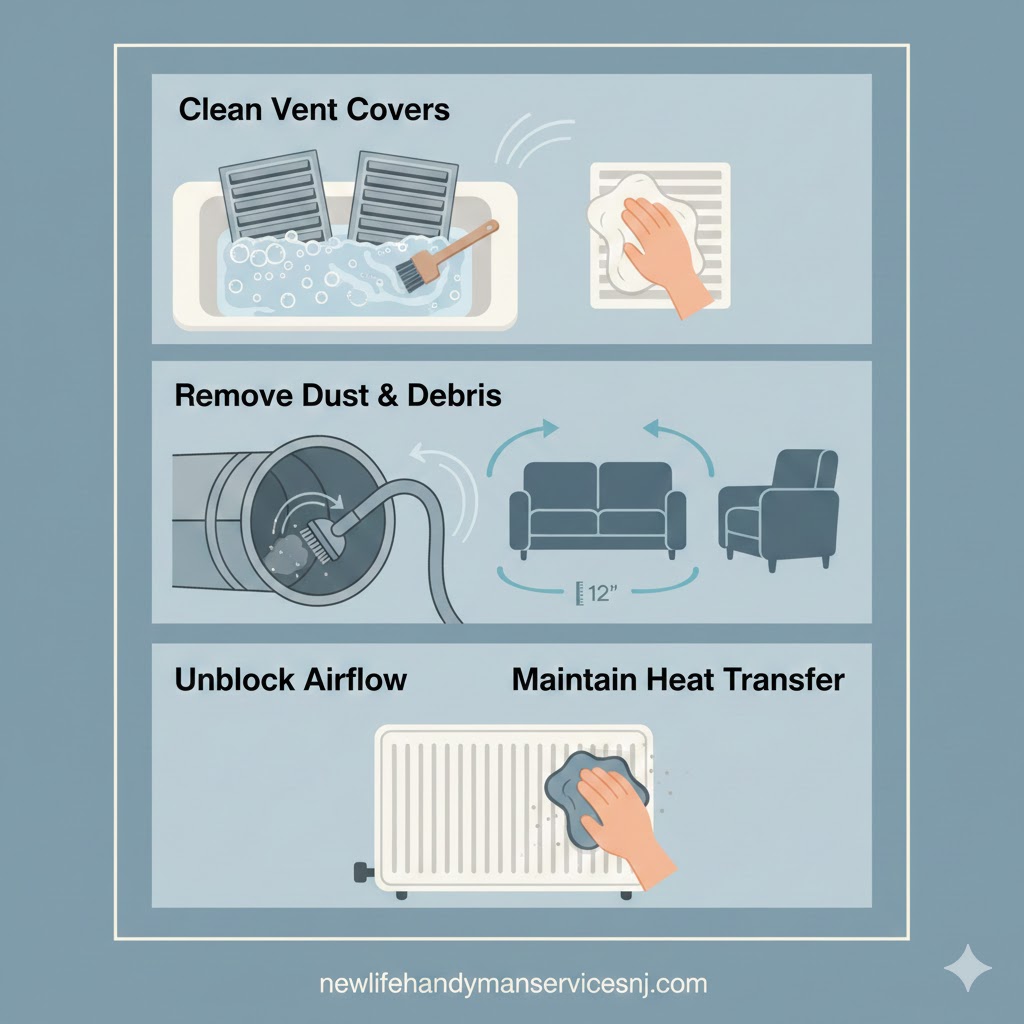
Consider professional duct cleaning every 3-5 years. Professional equipment reaches dirt you can’t access with household tools.
What’s the Right Way to Maintain Radiators?
Radiators need bleeding when air gets trapped inside. Trapped air creates cold spots and reduces heat output.
You’ll need a radiator key (available at hardware stores for under $5). Turn off your heating system first.
Place a towel under the valve. Insert the key and turn counterclockwise until you hear hissing. That’s trapped air escaping.
Keep the valve open until water starts dripping steadily. Then close it tight.
Start with radiators on upper floors. Air rises naturally, so these units trap air first.
Check all radiators in your home. Even one blocked radiator affects system balance and efficiency.
Vacuum around radiators monthly. Dust on fins blocks heat transfer. Use a radiator brush (long, narrow brushes designed for tight spaces) to clean between fins.
Never paint over radiator valves. Paint can seal them shut, preventing necessary adjustments.
If radiators stay cold after bleeding, you likely have circulation problems requiring professional attention. Our team at New Life Handyman Services handles these complex issues regularly.
How Do Programmable Thermostats Save Energy?
A programmable thermostat is the fastest way to cut heating costs without sacrificing comfort. Modern thermostats pay for themselves in one winter.
Program different temperatures for different times. Lower the temperature by 7-10 degrees when you’re sleeping or away from home.
The Department of Energy estimates this saves 10% annually on heating costs. For most West Long Branch homes, that’s $100-150 in winter savings.
Set your schedule based on actual occupancy. There’s no point heating an empty house to 72 degrees all day.
Use the “hold” feature sparingly. Constantly overriding your program defeats the purpose.
Smart thermostats learn your patterns automatically. They adjust based on outdoor temperature, humidity, and your preferences.
Many utilities offer rebates on programmable thermostats. Check with your provider before buying.
Installation takes 30 minutes if you’re replacing an existing thermostat. Match wire colors carefully or call a professional.
For homeowners tackling multiple winter efficiency projects, our guide on making your home more energy-efficient for winter covers comprehensive strategies.
What Are the Signs Your Heating System Needs Professional Help?
Some problems require professional diagnosis and repair. Don’t ignore these warning signs.
Strange noises beyond normal operation sounds indicate mechanical problems. Grinding, screeching, or loud banging requires immediate attention.
Uneven heating between rooms suggests ductwork issues or system imbalance. One cold room might seem minor, but it signals efficiency problems throughout your home.
Rising energy bills without increased usage mean your system is working harder to produce the same heat. Compare bills from previous winters.
Frequent cycling (turning on and off repeatedly) wastes energy and stresses components. This often indicates thermostat problems or an oversized system.
Yellow pilot lights or soot around the furnace signal combustion problems. These create carbon monoxide risks requiring immediate professional inspection.
Age matters too. Furnaces over 15 years old lose efficiency even with perfect maintenance. High-efficiency furnaces achieve up to 98% energy efficiency compared to 60-70% for older models.
If you’re hearing unusual sounds, read our troubleshooting guide on fixing a noisy heater.
When Should West Long Branch Homeowners Consider Upgrades?
Sometimes repair isn’t the best answer. Upgrading to a high-efficiency system makes financial sense in specific situations.
If your furnace is over 15 years old and needs major repairs (over $500), replacement often costs less long-term than continuing repairs.
High-efficiency furnaces with AFUE ratings of 95% or higher qualify for rebates up to $1,500 in New Jersey. Some models with 97% ratings earn up to $2,000 in rebates.
Calculate your payback period. If energy savings plus rebates cover the upgrade cost within 5-7 years, upgrading makes sense.
The HVAC industry has grown to $30.41 billion with projected growth of 7.4% annually through 2030. This growth reflects increasing emphasis on efficiency.
New systems include smart features like zone control, variable-speed blowers, and diagnostic alerts. These features improve comfort while reducing energy waste.
Alternative heating solutions like ground source heat pumps can reduce energy consumption by up to 72% compared to electric resistance heating.
We help West Long Branch homeowners evaluate upgrade options based on home size, current system condition, and budget. Our experience installing systems across Monmouth County gives us insight into what works best for different home types.
For related winter preparation, see our top winter handyman tips for New Jersey homeowners.
How Does Professional Maintenance Differ from DIY?
Homeowner maintenance handles the basics—filters, vents, and simple cleaning. Professional maintenance goes deeper.
We inspect heat exchangers for cracks invisible to homeowners. Cracked heat exchangers leak carbon monoxide into your home.
Professionals measure airflow and static pressure. These measurements reveal duct problems and blower issues you can’t detect by feel.
We test safety controls under load conditions. Limit switches, rollout switches, and pressure switches must function perfectly.
Combustion analysis measures efficiency precisely. We adjust fuel mixture for optimal burning and lowest emissions.
Professionals clean burners and flame sensors properly. Improper cleaning can damage these sensitive components.
We lubricate motors and inspect electrical connections. Loose connections create heat and fire risks.
Our team checks refrigerant levels in heat pumps. Low refrigerant reduces heating capacity and damages compressors.
Professional maintenance typically costs $100-150 annually. That investment prevents the $300 to $1,000 emergency repair bills that come from neglect.
At New Life Handyman Services NJ, we combine heating system expertise with general handyman skills. If we find other issues during inspection—like drafty windows or inadequate insulation we handle those problems too.
Learn more about our comprehensive approach to handyman services in West Long Branch.
Conclusion
Heating system efficiency in winter comes down to consistent maintenance and smart operation. Change filters monthly, keep vents clear, bleed radiators when needed, and use programmable thermostats effectively.
Professional inspections catch problems before they become emergencies. The money you spend on annual maintenance returns through lower energy bills and avoided repair costs.
Don’t wait for a breakdown to think about your heating system. Call (908) 308-9222 or visit our homepage to schedule your heating system inspection with West Long Branch’s 5-star rated handyman professionals. We’ll keep your home warm and your energy bills low all winter long.


