Spa Bathroom Remodel Trends 2026: What NJ Homeowners Are Asking For
April 8, 2026
A small nail hole in your drywall costs $10–$55 to fix yourself with a patch kit. The same hole patched poorly shows through every coat of paint and drops your home’s presentation quality. Professional drywall repair in New Jersey averages $350–$650 per job, and for anything bigger than a screw hole, the pro result is worth the difference.
Drywall damage is one of the most common issues New Life Handyman Services sees in Monmouth County homes. From settling cracks in older West Long Branch houses to water damage from a slow pipe leak, drywall problems compound when ignored and look worse when fixed incorrectly.
Key Takeaways
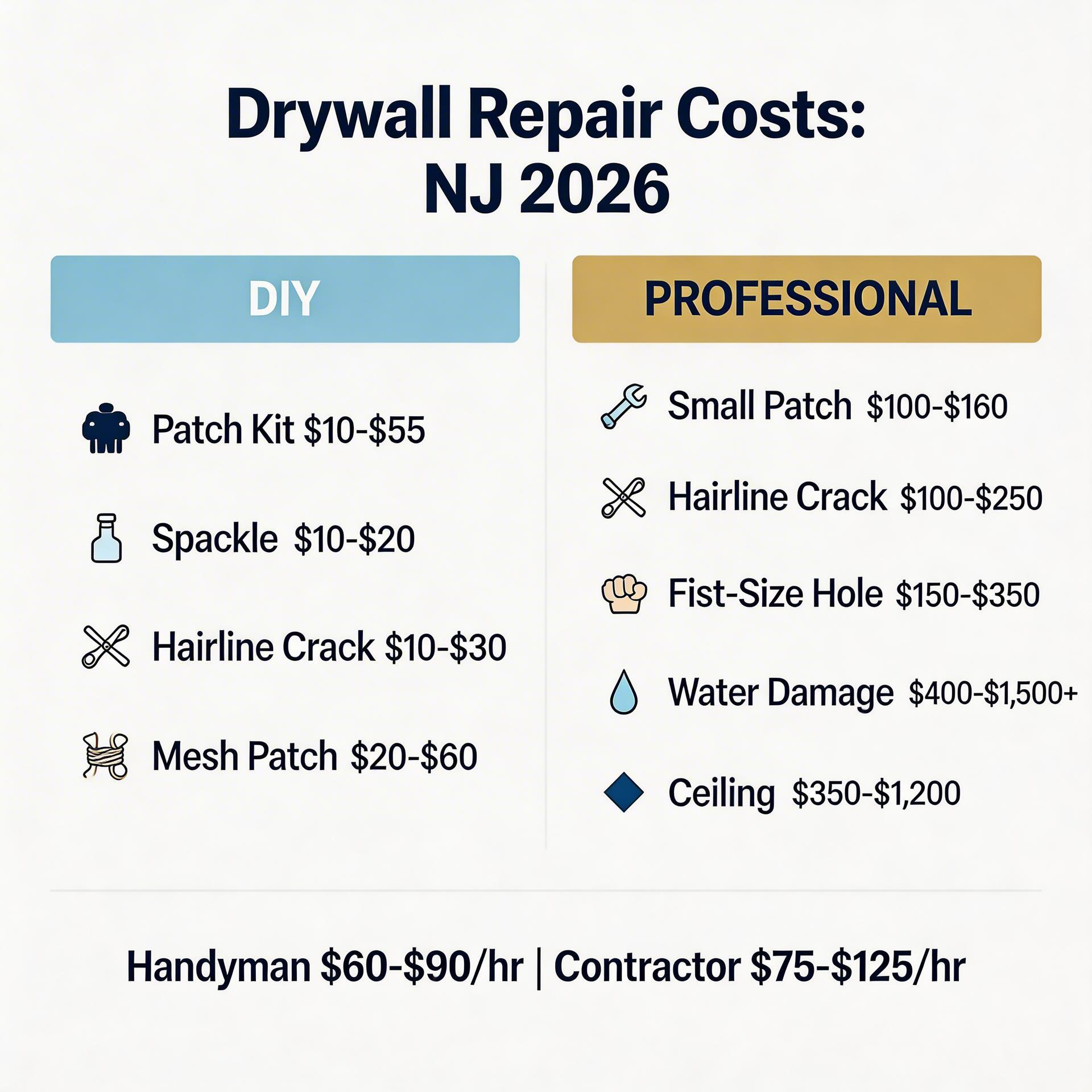
- Professional drywall repair in NJ averages $350–$650, with small patches at $100–$160 and water damage repairs at $400–$1,500+.
- DIY patch kits cost $10–$55 for small holes but require multiple coats, drying time, and sanding skill to look invisible.
- Handyperson rates for drywall work in NJ run $60–$90/hour, with licensed drywall contractors at $75–$125/hour.
- Ceiling drywall repair costs $70–$85 per sq ft — 20–30% more than walls due to overhead labor and safety setup.
- Water-damaged drywall replacement runs $75–$100 per sq ft and requires a mold assessment before any patching begins.
What Drywall Repair Actually Costs in New Jersey
Drywall repair pricing in Monmouth County breaks down by damage type, size, and location. A handyman assessing your wall will categorize the repair into one of several scopes, each with its own pricing range.
| Damage Type | DIY Cost | Professional Cost | Complexity |
|---|---|---|---|
| Small nail/screw hole | $10–$55 (patch kit) | $100–$160 | Low |
| Hairline crack | $10–$30 (compound + tape) | $100–$250 | Low–Medium |
| Stress/seam crack | N/A | $150–$350 | Medium |
| Structural crack (>1/8″) | N/A | $300–$800 | High |
| Fist-size hole | $20–$60 (mesh patch) | $150–$350 | Medium |
| Water damage (minor) | N/A | $150–$400 | Medium |
| Water damage (severe) | N/A | $800–$1,500+ | High |
| Ceiling repair (any type) | N/A | $350–$1,200 | High |
The minimum service call for a drywall job in Monmouth County typically runs $100–$250. That covers travel, setup, materials, and cleanup. For a single small hole, the handyman may charge the minimum even if the actual patch takes 20 minutes.
When DIY Drywall Repair Actually Works?
Not every drywall repair needs a pro. There are specific situations where a homeowner with patience and a patch kit can produce an acceptable result:
Screw holes and tiny dents. A tube of spackle, a putty knife, and light sanding take care of these in one coat. The material costs $10–$20 and the fix is genuinely invisible after paint.
Low-visibility areas. Closets, behind furniture, in the garage — places where side lighting won’t reveal a slightly uneven patch. If you’re planning to repaint the entire wall anyway, a minor spot repair disappears under the fresh coat.
You’re comfortable with a multi-day process. Proper drywall patching requires at least two coats of joint compound with 24 hours of drying time between each coat, followed by sanding, priming, and painting. If you can spread the work across a weekend, the result will be acceptable for most homeowners.
The key limitation is expectations. A DIY patch will rarely look perfect under direct sunlight or angled lamp light. If the wall needs to look flawless, say, in a living room you’re preparing to sell, the pro route is worth the cost difference.
When You Should Absolutely Hire a Professional
Some drywall problems are beyond the scope of a weekend patch kit. Here’s where DIY almost always makes things worse:
1. Water-damaged drywall. If the drywall is soft, discolored, sagging, or showing mold, the problem isn’t cosmetic — it’s structural and potentially a health hazard. Water damage repair requires cutting out the affected section, assessing the studs and insulation behind it, fixing the source of the moisture, and replacing the panel. This is not a patch-kit job. Minor water damage runs $150–$400 to fix professionally, while severe damage with mold runs $800–$1,500+.
2. Ceiling repairs. Drywall on a ceiling is heavier, harder to support during installation, and more dangerous to work under. Ceiling-specific repair costs $350–$1,200 because of the overhead labor, scaffolding needs, and gravity working against you.
3. Recurring or structural cracks. Cracks wider than 1/8 inch, cracks that reappear after patching, or cracks running along the seam between two panels usually indicate foundation settling, framing movement, or improper original installation. A simple patch won’t hold — the underlying cause needs addressing. Professional repair for structural cracks runs $300–$800.
Highly visible walls under side lighting. If a wall gets direct afternoon sun from a window or has recessed lighting that casts across the surface, every imperfection shows. Feathering a patch so it’s invisible under side lighting is a skilled technique that most DIY attempts don’t achieve.
The Most Common DIY Drywall Mistakes
These are the errors that turn a simple $30 patch kit job into a $400 rework:
Applying compound too thickly. One heavy pass of joint compound looks lumpy, cracks as it dries, and takes days to cure. Pros apply two or three thin coats, each feathered wider than the last.
Insufficient drying time between coats. Joint compound needs 24 hours to dry between coats in normal humidity. In a humid Monmouth County spring, it can take longer. Rushing the next coat creates soft spots that sand unevenly.
Poor feathering. The edge of the patch should blend gradually into the surrounding wall over 6–12 inches. A visible ridge between the patch and the wall means the compound wasn’t feathered far enough.
Skipping primer before painting. Joint compound absorbs paint differently than the surrounding wall. Painting directly over a fresh patch without primer creates a visible flash — a dull spot where the patch shows through the topcoat.
Using the wrong patch method for the damage size. A self-adhesive mesh patch works for a fist-sized hole. It doesn’t work for a 6-inch tear or a water-damaged section that’s soft behind the surface. Selecting a patch method too light for the actual damage is the fastest path to a callback.
Cost Comparison: DIY vs. Professional Drywall Repair
| Scenario | DIY Cost | Professional Cost | What You’re Paying For |
|---|---|---|---|
| Single nail hole | $10–$20 | $100–$160 | Clean finish, primer-ready surface |
| Hairline crack (2 ft) | $10–$30 | $100–$250 | Tape reinforcement, multiple coats, seamless finish |
| Door-sized hole patch | $20–$60 | $200–$400 | Backing board, compound, sanding, paint blending |
| Water damage section | N/A | $400–$800 | Cut-out, moisture source repair, panel replacement |
| Ceiling crack | N/A | $250–$600 | Overhead labor, scaffolding, safety equipment |
For a single nail hole, the DIY savings are obvious. For anything involving water damage, ceiling work, or cracks larger than a hairline, the professional result justifies the cost difference. A botched DIY repair on a visible wall costs more to fix twice than to hire a pro the first time.
How Drywall Repair Fits Into Your Bigger Home Maintenance Plan?
Drywall damage is rarely an isolated issue. A crack might indicate foundation settling that also affects door alignment and floor levelness. Water damage behind a wall often means a plumbing leak that needs fixing before the drywall goes back up. And if you’re planning exterior painting or a kitchen renovation, addressing drywall issues first ensures those investments look their best.
New Life Handyman Services provides home repairs and maintenance in West Long Branch across all trades — drywall, plumbing, electrical, painting, and remodeling. We give you honest pricing before any work begins and free estimates on all projects.
Frequently Asked Questions
1. How much does drywall repair cost in New Jersey?
Professional drywall repair in NJ averages $350–$650 per job. Small patches run $100–$160, hairline cracks run $100–$250, and water damage repairs run $400–$1,500+, depending on severity.
2. Can I fix a small hole in drywall myself?
Yes. Small nail and screw holes are easily fixed with a tube of spackle and a putty knife. DIY patch kits cost $10–$55 and work well for holes up to about 2 inches. Anything larger requires a mesh patch or professional backing.
3. How much does ceiling drywall repair cost?
Ceiling drywall repair costs $350–$1,200 in New Jersey, or $70–$85 per sq ft. Ceiling work is 20–30% more expensive than walls due to overhead labor and safety equipment needs.
4. How long does drywall repair take?
A single small patch takes 30–60 minutes of active work, but requires 24 hours of drying time between coats. Most professional drywall repairs are completed in 1–2 visits over 2–3 days to allow proper drying and sanding.
5. Do I need to repaint the whole wall after a drywall patch?
Not always. For small patches, spot-priming and blending paint into the surrounding area works fine. For larger repairs or walls with existing wear, repainting the full wall ensures a uniform finish. Add $1.50–$3.50 per sq ft for painting if you want the pro to handle it.