Window Installation Cost NJ 2026: DIY Steps & Pro Tips
Key Takeaways
- Replacing a single window in New Jersey typically costs $300 to $1,200 per window , including materials and labor.
- DIY window replacement saves on labor but requires precise measuring, proper flashing, and an understanding of structural load.
- ENERGY STAR-certified windows cut household energy bills by an average of 12% nationwide, compared to non-certified products.
- In coastal Monmouth County, windows must handle high humidity, salt air, and wind loads up to 90 mph.
- Professional installers typically complete the job in 2 to 4 hours per window and include a workmanship warranty.
Replacing a window in New Jersey costs $300 to $1,200 per unit , depending on size and material. Whether you do it yourself or hire a pro. For a typical West Long Branch home with ten windows, that’s a $3,000 to $12,000 project.
Some homeowners tackle one or two windows on their own. Others hire a pro for the whole house. The right path depends on your skill level, the window type. How much risk you’re willing to take on a hole in your wall?
New Life Handyman Services NJ installs and replaces windows across Monmouth County. We’ve fixed DIY jobs that leaked within a month. We’ve also guided handy homeowners through simple insert replacements. Our assembly and installation services cover windows, doors, and fixtures for homeowners who want it done right the first time. Here’s how to decide which path makes sense — and what each one actually involves.
When DIY Window Replacement Makes Sense
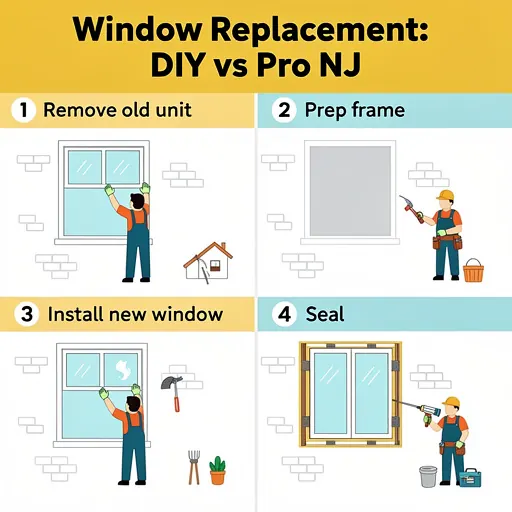
An insert replacement — where the new window fits inside the existing frame — is the most DIY-friendly option. You don’t touch the siding, the trim, or the structural framing. You simply remove the sashes and slide the new unit in.
DIY works best when:
- The existing frame is square, level, and free of rot
- You’re replacing a standard-size double-hung or single-hung window
- You have basic carpentry tools and experience
- You’re comfortable working on a ladder
- The window is on the first floor
Tools You’ll Need
- Tape measure and carpenter’s square
- Pry bar and utility knife
- Level (2-foot minimum)
- Caulk gun with exterior-grade sealant
- Shims (composite or wood)
- Drill with screwdriver bits
- Safety glasses and work gloves
- Expanding foam insulation (low-expansion for windows)
A direct replacement insert costs $150 to $600 for the unit. If the frame is intact, the job takes 2 to 4 hours for a first-timer. For more complex home repair and maintenance projects, professional help often pays for itself in time and quality.
Step-by-Step: How to Replace a Window Insert
Step 1: Measure the existing frame opening. Measure the width and height of the frame opening in three places. Top, middle, and bottom for width; left, center, and right for height. Use the smallest measurement for each dimension. Order your window ½ to ¾ inch smaller than the opening to allow for squaring and insulation.
Step 2: Remove the old sashes. Pull out the stops — the thin trim pieces that hold the sashes in place. Cut any paint seal with a utility knife first to avoid tearing the trim. Remove the lower sash, then the upper sash. Take out the parting bead if there is one.
Step 3: Prep the opening. Clean out debris, old caulk, and rotted wood. Check the sill for pitch — it should slope slightly outward so water drains away from the house. If the sill is flat or pitched inward, water will pool and rot the frame.
Step 4: Dry-fit the new window. Set the new unit in the opening without fasteners. Check for level and plumb. The window should sit flush with the interior drywall and align with the exterior siding. Use shims to adjust. Mark the Shim locations with a pencil.
Step 5: Install and secure. Apply a bead of exterior-grade caulk to the exterior blind stop. Set the window in place. Shim at the sides, top, and bottom. Drive screws through the predrilled holes in the jambs into the frame. Don’t overtighten — the window needs to sit naturally without bowing.
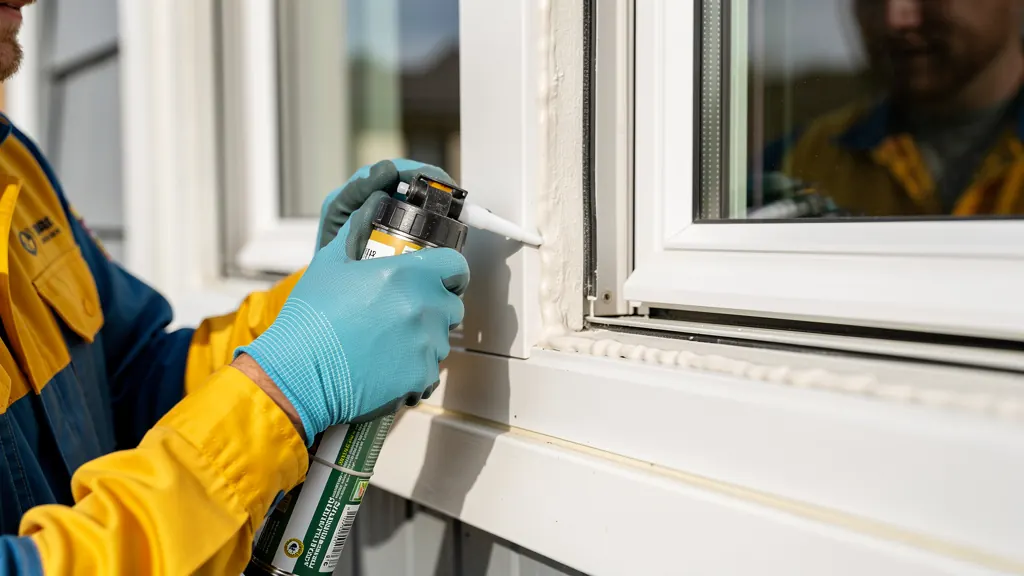
Step 6: Insulate and seal. Fill the gap between the window frame and the rough opening with low-expansion foam insulation. Standard expanding foam can bow the frame and jam the sashes. Once cured, trim the excess. Caulk the exterior seam between window and siding.
Step 7: Replace interior trim. Reinstall the stops or add new interior trim. Caulk paintable seams. Touch up paint.
That’s the basic process. But here’s where it gets tricky.
Where DIY Window Replacement Goes Wrong
Measuring errors are the most common mistake. A window that’s too small leaves a gap that’s hard to insulate properly. A window that’s too large won’t fit at all. Custom orders usually can’t be returned.
Flashing failures cause the most damage. Without proper head flashing and housewrap integration, water runs behind the siding. It rots the sheathing. By the time you see stains inside, the wall is already damaged.
Level and square matter more than most people think. A window that’s even ¼ inch out of plumb won’t open or close smoothly. The sash rails bind. The locks don’t align. The weatherstrip gaps.
Code compliance is another issue. New Jersey follows the International Residential Code (IRC) for egress requirements. Bedrooms need an opening of at least 5.7 square feet. The minimum height is 24 inches and width is 20 inches. A smaller window won’t pass inspection and creates a safety hazard.
When You Should Hire a Pro
Full-frame replacement — where the entire window frame. Trim comes out down to the rough opening — is almost always a pro job. So is any window on the second story or higher.
Hire a professional if:
- The existing frame has rot, termite damage, or water stains
- You’re changing the window size or style
- The house has stucco, brick, or non-standard siding
- The window is on the second floor or above
- You need to meet egress code requirements
- You want a warranty on the installation
Professional window replacement in NJ costs $300 to $1,200 per window , including labor. Vinyl windows fall on the lower end. Wood or fiberglass units cost more. Large picture windows or custom shapes can run $1,500 to $3,000 each.
What a Pro Does Differently
A professional installer checks the rough opening for square, level, and structural integrity before the new window goes in. They integrate head flashing with the housewrap. They use proper sill pan flashing to direct water out. They know how to shim so the window operates smoothly for decades.
Most pros also carry general liability and workers’ compensation insurance. If a ladder goes through your siding or someone gets hurt, you’re not liable.
And then there’s the warranty. Most manufacturers require professional installation to honor the product warranty. Install it yourself, and a fogged glass or failed seal might be your problem alone.
Energy Efficiency: The Real Reason to Replace Windows
New windows aren’t just about looks. Old single-pane windows or failed double-pane seals leak heat in winter and let it in during summer.
ENERGY STAR-certified windows lower household energy bills by an average of 12% compared to non-certified products. In cold climates like New Jersey, the savings come mainly from reduced heating loads. The U.S. Department of Energy notes that heat gain and loss through windows accounts for 25% to 30% of residential energy use.
For Monmouth County homes near the coast, look for windows with:
- Low-E glass coatings to reflect heat
- Argon or krypton gas fills the spaces between panes
- Warm-edge spacers to reduce condensation
- A U-factor of 0.30 or lower for NJ climate zones
Cost Comparison: DIY vs. Professional Window Replacement
| Factor | DIY Insert Replacement | Professional Full-Frame Replacement |
|---|---|---|
| Cost per window | $150–$600 (materials only) | $300–$1,200 (installed) |
| Time per window | 2–6 hours | 2–4 hours |
| Tools needed | $100–$300 | Included |
| Warranty | Product only | Product + workmanship |
| Code compliance | Your responsibility | Handled by the installer |
| Flashing/weatherproofing | Basic | Full system integration |
| Disposal of old window | You handle it | Usually included |
Cost data from**professional window replacement averaging $300–$1,200 installed in NJ** and custom or large windows running $1,500–$3,000 , adjusted for NJ market conditions.
NJ-Specific Considerations for West Long Branch Homes
Coastal Monmouth County has specific challenges. Salt air corrodes aluminum frames. High humidity promotes condensation and mold on poorly insulated windows. And wind loads here are higher than in inland zones.
If you live within a mile of the shore, consider impact-resistant glass or windows rated for higher design pressure. The NJ Uniform Construction Code requires proper fastening and anchorage in wind-borne debris regions. For related advice, see our guide on why weatherproofing your windows and doors is critical for winter.
Older homes in West Long Branch — many built in the 1950s and 1960s — often have odd-sized windows. Custom sizing adds 20% to 40% to the material cost but avoids the structural headaches of resizing the opening. If your project is part of a larger upgrade, our remodeling services can coordinate windows with siding and trim.
If your windows are drafty, hard to open, or showing condensation, a quick call gets you a free estimate. We will give you a straight answer on DIY vs. pro installation. While you’re upgrading, check out our flooring installation cost guide for NJ to plan your next interior project.
Hire a Window Installation Pro in West Long Branch
Not sure if your windows need repair or full replacement? Call (908) 308-9222 for a free assessment. We handle window replacement across Monmouth County with upfront, transparent pricing.
Frequently Asked Questions
1. How much does it cost to replace one window in New Jersey?
A standard vinyl window replacement in NJ costs $300 to $800 installed. Wood or fiberglass windows run $700 to $1,200. Custom sizes, egress requirements, or second-story access push costs higher.
2. Can I replace a window myself without a permit in NJ?
Insert replacements in existing openings usually don’t require permits. Full-frame replacements or changes to the rough opening typically do. Monmouth County follows NJ construction codes , so check with your local building department before starting.
3. How long do replacement windows last?
Vinyl windows last 20 to 40 years. Wood windows last 30-plus years with proper maintenance. Fiberglass windows can last 50 years. The key factor is installation quality. A well-installed cheap window outlasts a poorly installed expensive one.
4. What’s the best time of year to replace windows in NJ?
Spring and fall are ideal. Temperatures between 40°F and 80°F let caulk and foam cure properly. Winter installations are possible but require extra care to prevent heat loss and adhesive failures.
Need a hand with your home?
If you have a plumbing question or need to schedule a service call, our team is ready to help. We serve West Long Branch and communities across Monmouth and Ocean Counties, NJ.