Garbage Disposal Replacement Cost: Repair or Replace?
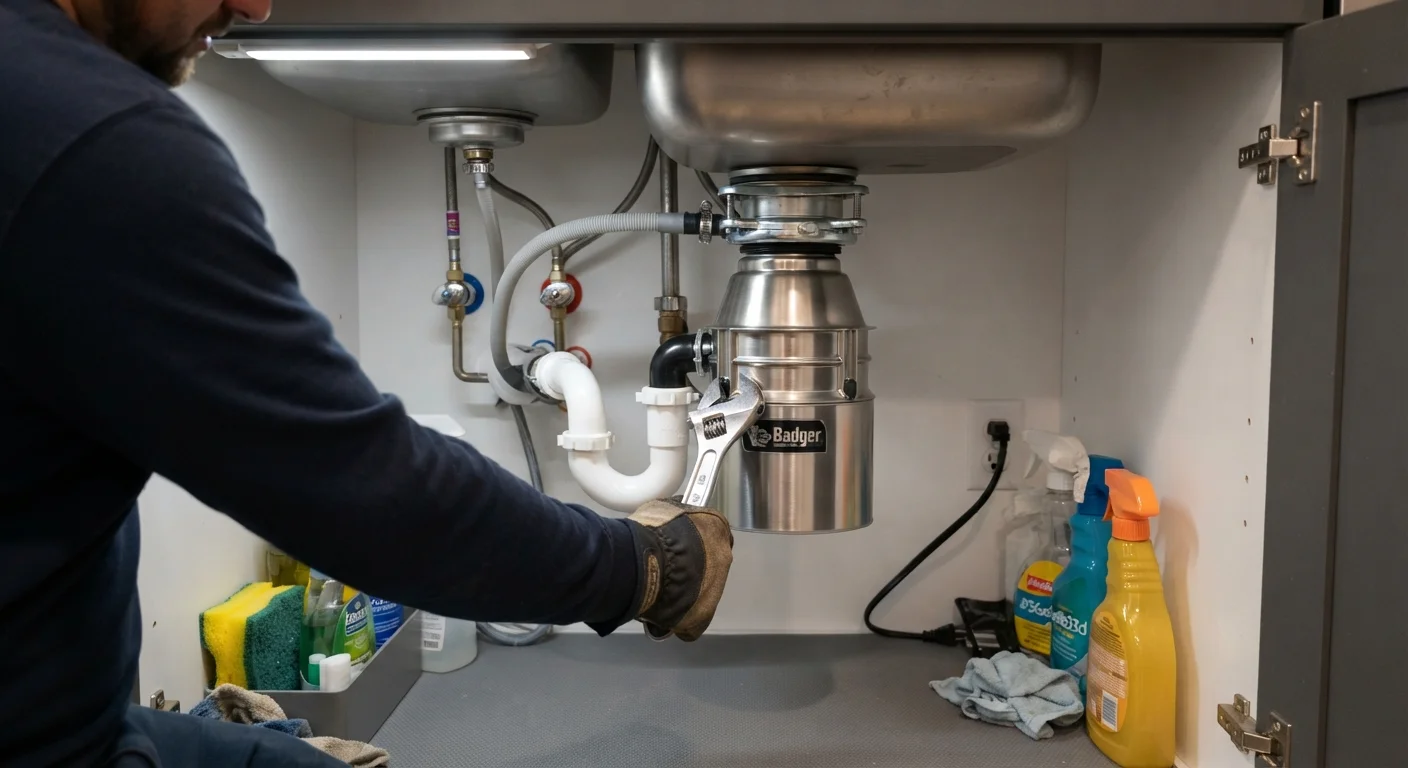
A garbage disposal is one of the few appliances that gives almost no warning. It works, then it hums, then it does nothing. By the time most homeowners think about the cost, the sink is already full.
The good news is that this is a small job with a well-understood price. The decision worth thinking about is not which model to buy. It is whether the unit needs replacing at all.
Key Takeaways
- Homeowners pay an average of $400 to $500 to buy and install a new disposal, with the full range running from about $150 to $950.
- Motor size drives the unit price far more than brand does. A 1 horsepower unit runs $200 to $500 before labor.
- A humming unit with no rotation is usually jammed, not dead. The reset button and the hex wrench fix it in five minutes.
- On septic, the EPA advice is to eliminate or limit disposal use, because it adds solids and increases pumping frequency.
- Adding a new outlet or switch for a disposal is minor work under New Jersey code, which means a permit and a licensed electrical contractor.
What a Replacement Actually Costs
| Motor size | Suits | Unit price |
|---|---|---|
| 1/3 horsepower | One or two people, light use | $75 to $150 |
| 3/4 horsepower | Three or four people, daily use | $100 to $250 |
| 1 horsepower | Five or more, heavy use | $200 to $500 |
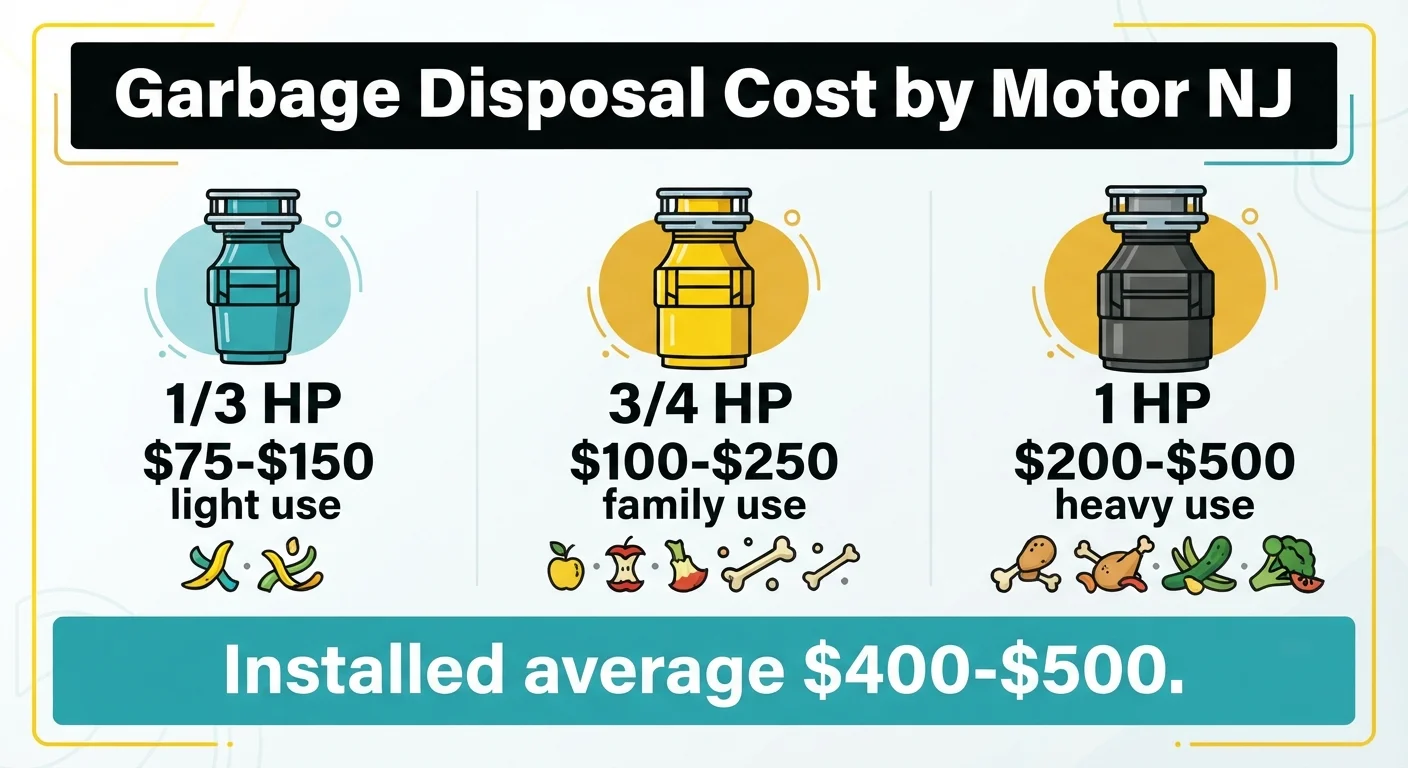
Labor sits on top of that. A handyman generally charges between $50 and $75 an hour for this work. A licensed plumber can run up to $150 an hour. Most swaps take one to two hours when the mounting assembly matches.
The mounting assembly is the variable nobody quotes for. If the new unit uses the same mount as the old one, the job is quick. If it does not, the sink flange comes out and the drain is rebuilt, which adds an hour.
That is the single best reason to replace like with like. Staying in the same product family usually means the existing mount stays put.
Repair or Replace
| Symptom | Likely cause | The call |
|---|---|---|
| Hums, does not turn | Jammed flywheel | Repair. Hex wrench and reset button |
| Nothing at all, no hum | Tripped reset or dead switch | Repair. Check reset, then the circuit |
| Leaks from the bottom shell | Failed internal seal | Replace. Seals are not serviceable |
| Leaks at the sink flange | Failed plumber’s putty | Repair. Reseat the flange |
| Loud rattle, no obstruction | Worn bearings or broken impeller | Replace if over eight years old |
| Slow drain, disposal fine | Blockage downstream | Repair the drain, not the unit |
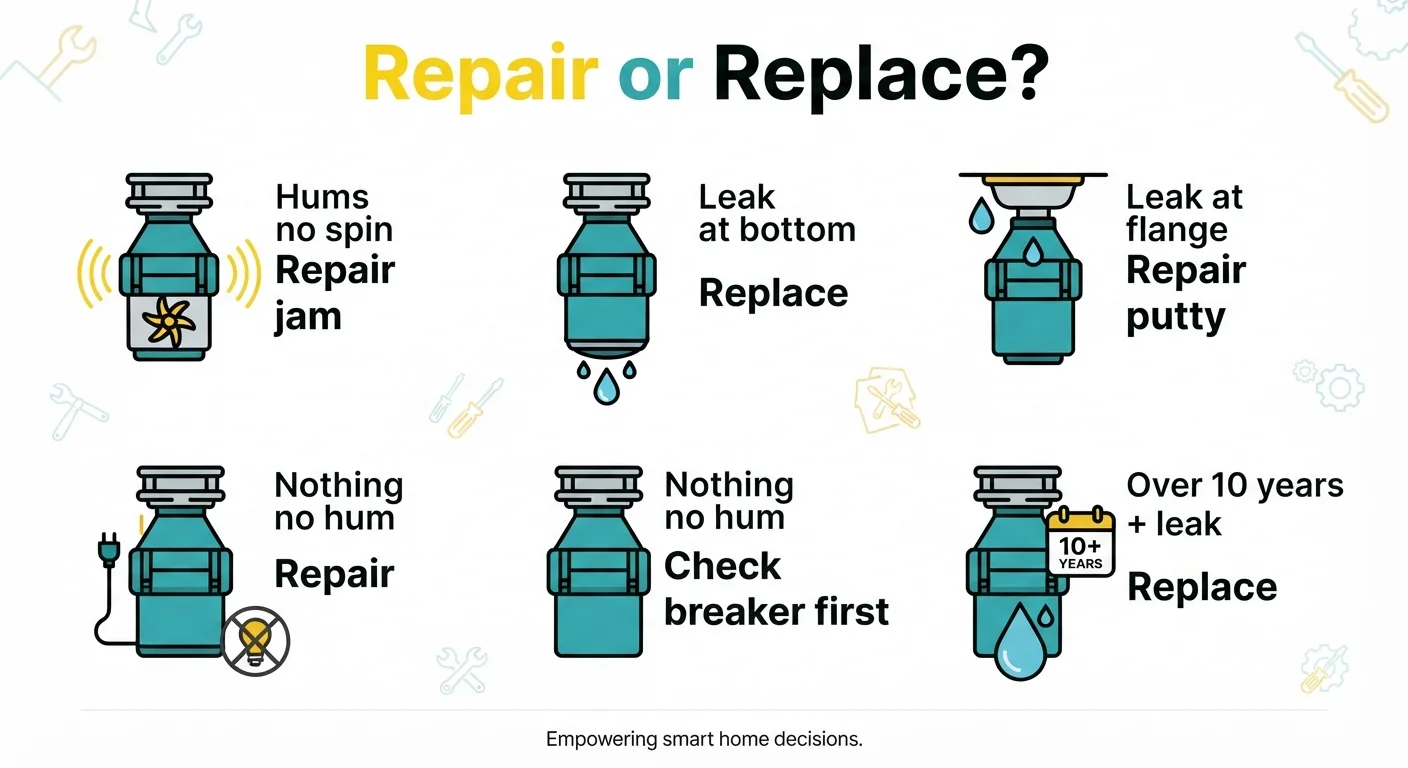
Two of those rows account for most of the calls we take. A hum with no rotation is a jam. A leak from the bottom of the housing is a death sentence.
The distinction between those two leaks matters. Water at the top, where the unit meets the sink, is a flange seal and costs almost nothing to fix. Water dripping from the base of the motor housing means the internal seal has gone. Once that fails, the motor windings are next.
In our experience, anything over ten years old and leaking from the shell is not worth diagnosing. The bench time costs more than the unit.
The Five Minute Fix Before You Buy Anything
Before spending anything, try this order.
Switch it off at the wall. Look underneath the unit for a small red reset button and press it. If it clicks in and stays, that was a thermal overload trip.
If it hums, the flywheel is jammed. Most units ship with a hex wrench that fits a socket in the center of the base. Turn it both directions until it moves freely, then press the reset.
If there is no sound at all and the reset holds, the problem is upstream. Check the switch and the circuit before condemning the appliance. A step by step replacement walkthrough is worth reading before you commit either way.
Never put a hand into the chamber. Use tongs or pliers to retrieve whatever went down, and only with the power off at the breaker.
What to Expect on the Day
A straightforward swap is a one visit job. Knowing the sequence makes it easier to tell a fair quote from a padded one.
The power comes off at the breaker first, not just at the wall switch. The drain line and dishwasher hose disconnect next. The old unit twists off its mounting ring and comes down still full of water. A bucket belongs under it.
If the mount matches, the new unit goes straight back up and the connections reverse. If it does not, the sink flange comes out from above. The old putty is cleaned off, then a new flange is bedded and tightened.
One detail gets missed more than any other. A new disposal ships with a knockout plug sealing the dishwasher inlet. It has to be punched out before the dishwasher hose is attached. Skip it and the dishwasher backs up on its first cycle.
The Septic Question That Changes the Answer
Plenty of homes in Ocean County run on septic rather than sewer. So do the outer parts of Monmouth County. That changes the calculation entirely.
The EPA position is blunt. Eliminating or limiting disposal use significantly reduces the fats, grease and solids reaching the tank. Food waste is digested slowly, and it accumulates as scum and sludge.
The practical consequence is pumping frequency. A tank normally gets pumped every three to five years. Regular disposal use shortens that interval, and a pump-out costs several hundred dollars each time.
That does not mean a septic home cannot have one. It means the honest comparison is the disposal plus more frequent pumping, against no disposal at all. Several manufacturers sell units aimed at septic households. Use the replacement compatibility guide to confirm mount and model before ordering.
If the sink is draining slowly and the disposal seems fine, the disposal is probably not the problem. That pattern is covered in our guide to slow drains and what causes them.
The Permit Question in New Jersey
This trips people up, so it is worth being precise.
New Jersey’s Department of Community Affairs publishes a list of work that counts as ordinary maintenance, needing no permit. Under plumbing, the list expressly names domestic clothes washers and domestic dishwashers as replaceable. Traps may be replaced, and stoppages may be cleared.
Garbage disposals are not named on that list. A like-for-like swap into an existing drain and outlet is generally treated as an appliance replacement. Your local construction office is the authority on that, and municipalities differ.
What is clear is the electrical side. Installing five or fewer new outlets is minor work. Say your kitchen has no disposal circuit and one has to be added. That is permit territory, and a licensed electrical contractor.
The same applies to an air switch installed through the countertop. The switch itself is simple. The circuit feeding it is not always.
Making the Whole Job Worth the Visit
A disposal swap opens the cabinet under the sink, and that cabinet is where several other small failures hide.
The supply stops are the usual find. Old multi-turn valves seize in place, and a homeowner discovers it during the next real emergency. Replacing them while the cabinet is already empty is the cheapest it will ever be.
The trap arm and tailpiece are the second. Fitting a new disposal to twenty year old plastic drain parts often means a slow weep two months later.
Homeowners tell us the visit paid for itself when a seized stop got caught early. Is the faucet also on its last legs? The numbers sit in our faucet installation cost guide. Larger kitchen work sits alongside our backsplash cost breakdown.
We handle disposal swaps as part of general plumbing service and wider home repairs. If you are unsure whether yours is jammed or finished, send us the symptom.
FAQ
How much does it cost to replace a garbage disposal?
Expect $400 to $500 on average for the unit and installation together. The full range runs about $150 to $950. Motor size and the mounting assembly drive most of that spread.
Is it worth repairing a garbage disposal?
Yes for jams, tripped resets and flange leaks. No for a leak from the bottom of the motor housing, which means an internal seal has failed and cannot be serviced.
What horsepower do I need?
Three quarters of a horsepower suits most three or four person households. A third of a horsepower is enough for one or two people with light use.
Do I need a permit to replace a garbage disposal in New Jersey?
A like-for-like swap into existing connections is usually treated as an appliance replacement, but check with your local construction office. Adding a new outlet or circuit for one is minor work and does need a permit.
Can I have a garbage disposal with a septic system?
You can, but the EPA recommends limiting or eliminating use. Disposals add solids that accumulate in the tank. That shortens the interval between pump-outs.
Sources
Need a hand with your home?
If you have a plumbing question or need to schedule a service call, our team is ready to help. We serve West Long Branch and communities across Monmouth and Ocean Counties, NJ.