Chimney Inspection Cost: What Each of the 3 Levels Buys
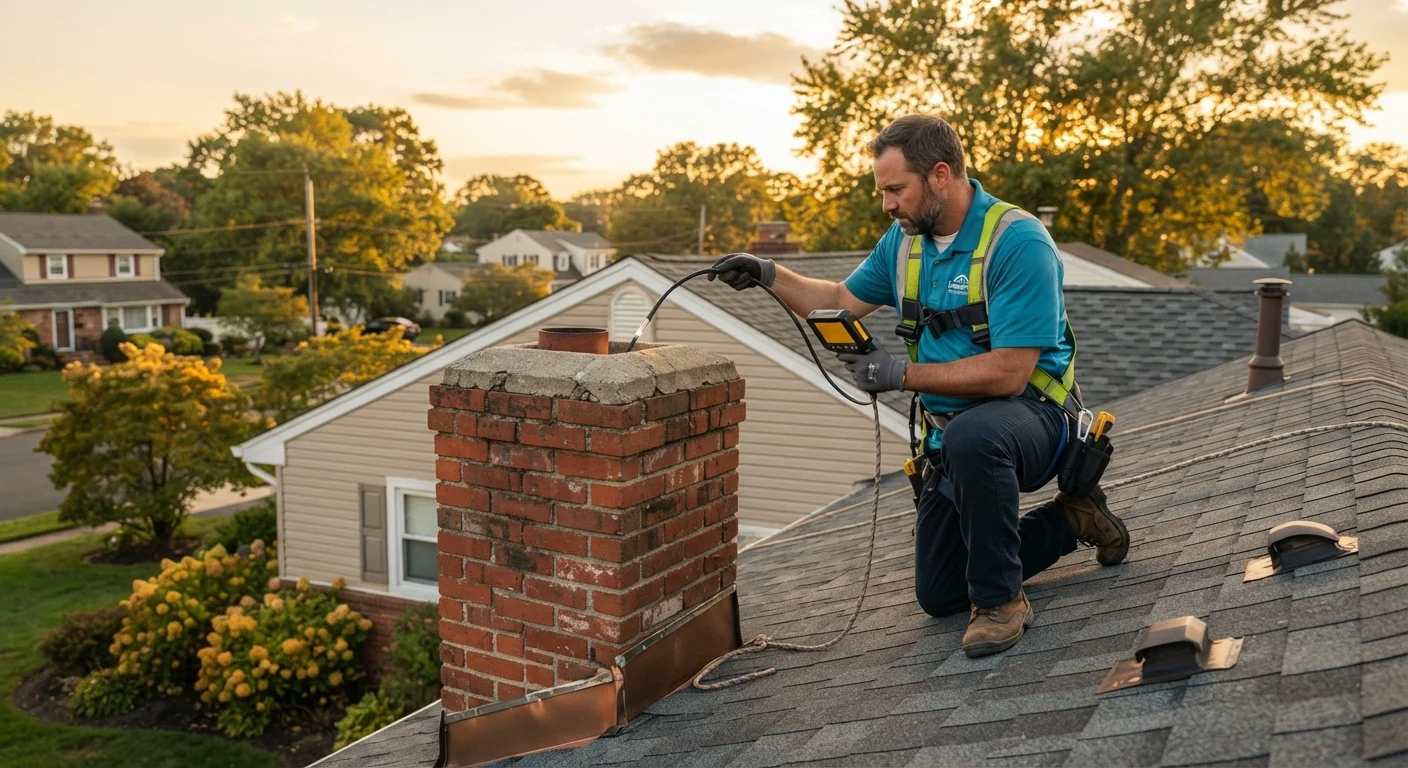
Most homeowners book a chimney inspection without knowing there are three of them. The sweep arrives and quotes a number. That number varies by a factor of ten, depending on which level the job needs.
That gap is not price gouging. The three levels are defined in NFPA 211, and they answer genuinely different questions. Knowing which one applies is the difference between a routine annual check and a surprise four-figure invoice.
Key Takeaways
- The three levels are set by NFPA 211, not by the individual company. Level 1 is visual, Level 2 adds a camera, Level 3 opens up the structure.
- NFPA 211 requires inspection at least once a year for soundness, freedom from deposits, and correct clearances.
- A Level 2 is mandatory at a property sale, after any chimney fire, and after an earthquake or severe storm.
- Annual inspection applies to gas appliances too. A blocked or corroded gas flue is a carbon monoxide problem, not a fire one.
- Heating equipment causes 9 percent of residential building fires, making it the second leading cause.
What Each Level Costs
| Level | What it involves | Typical cost |
|---|---|---|
| Level 1 | Visual check of accessible interior and exterior, plus readily accessible portions of the appliance and connection | $100 to $950 |
| Level 2 | Everything in Level 1, plus accessible attics, crawl spaces and basements, plus a video scan of the full flue | $200 to $1,000 |
| Level 3 | Everything above, plus removal of masonry or components to reach concealed areas | $500 to $5,000 |
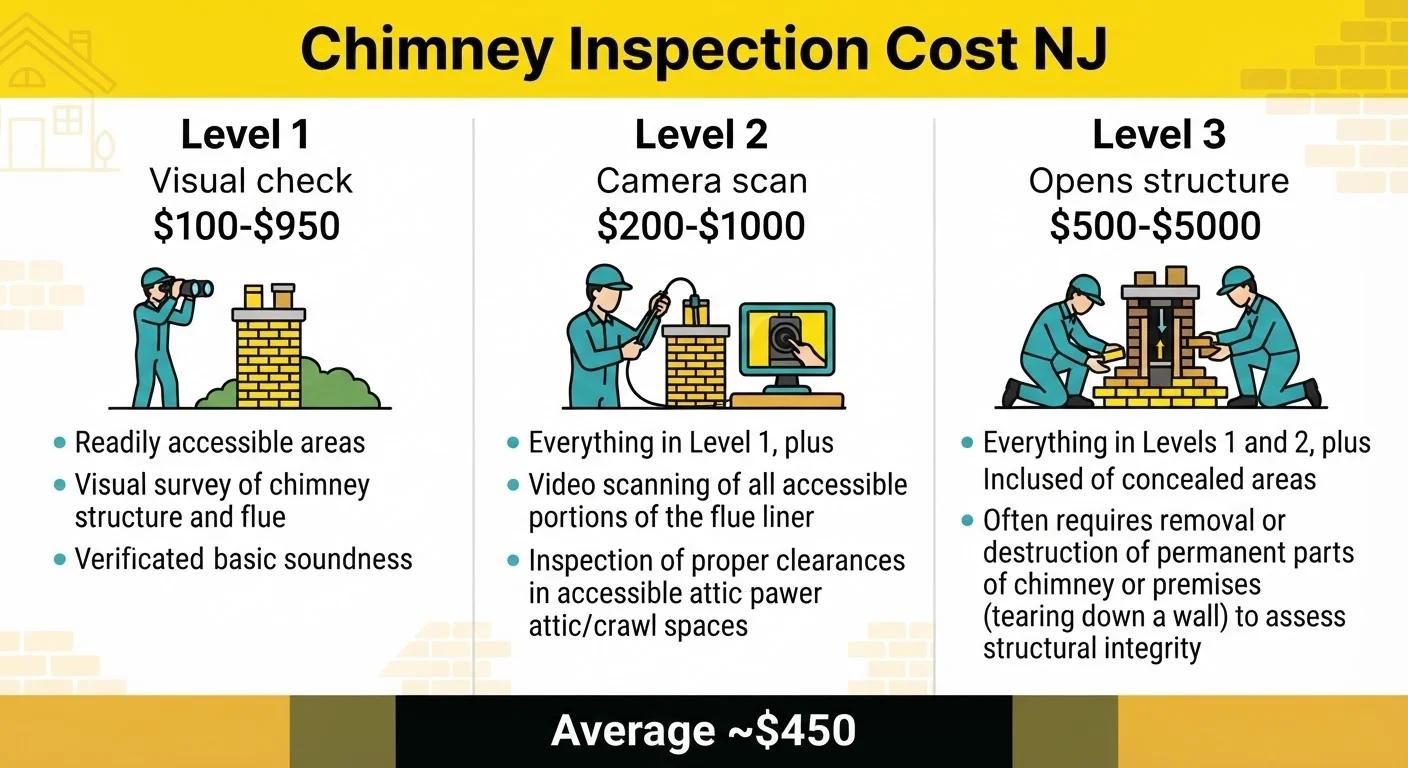
The national average across all three sits around $450. That figure is misleading on its own, because it blends a routine annual check with an invasive investigation.
A better way to read it: most homeowners in a normal year are buying a Level 1. The average gets pulled upward by the minority who needed more.
When Each Level Applies
A Level 1 is the annual check. It covers a chimney in continued service, under the same conditions, burning the same fuel. Nothing about the system has changed since last year.
A Level 2 is triggered by change or by event. Four situations require one.
The first is a property transfer. Buying or selling means a Level 2, because nobody can vouch for how the previous owner used the system.
The second is a change to the system. A new appliance, a different fuel, a relined flue or a changed shape all count. Each moves the chimney outside its previous conditions.
The third is after a chimney fire. Even a small one can crack a clay liner in ways no visual check will reveal.
The fourth is after a building or weather event. A nor’easter that moves a chimney crown, or lightning nearby, both qualify.
A Level 3 is not something a homeowner chooses. It follows a Level 2 that found evidence of a hazard the inspector cannot reach. That is why the cost range runs so wide. The work involves removing masonry, and the repair follows immediately.
Which Level Does Your Situation Need
| Your situation | Level required | Reason |
|---|---|---|
| Same fireplace, same fuel, annual check | Level 1 | Continued service, no change |
| Selling or buying the house | Level 2 | Ownership transfer |
| You had a chimney fire, even a small one | Level 2 | Hidden liner damage |
| New wood stove or insert added | Level 2 | System change |
| Storm moved the crown or cracked the stack | Level 2 | Building event |
| Level 2 found damage behind the masonry | Level 3 | Concealed hazard access |
| Gas fireplace, no changes | Level 1 | Annual requirement still applies |
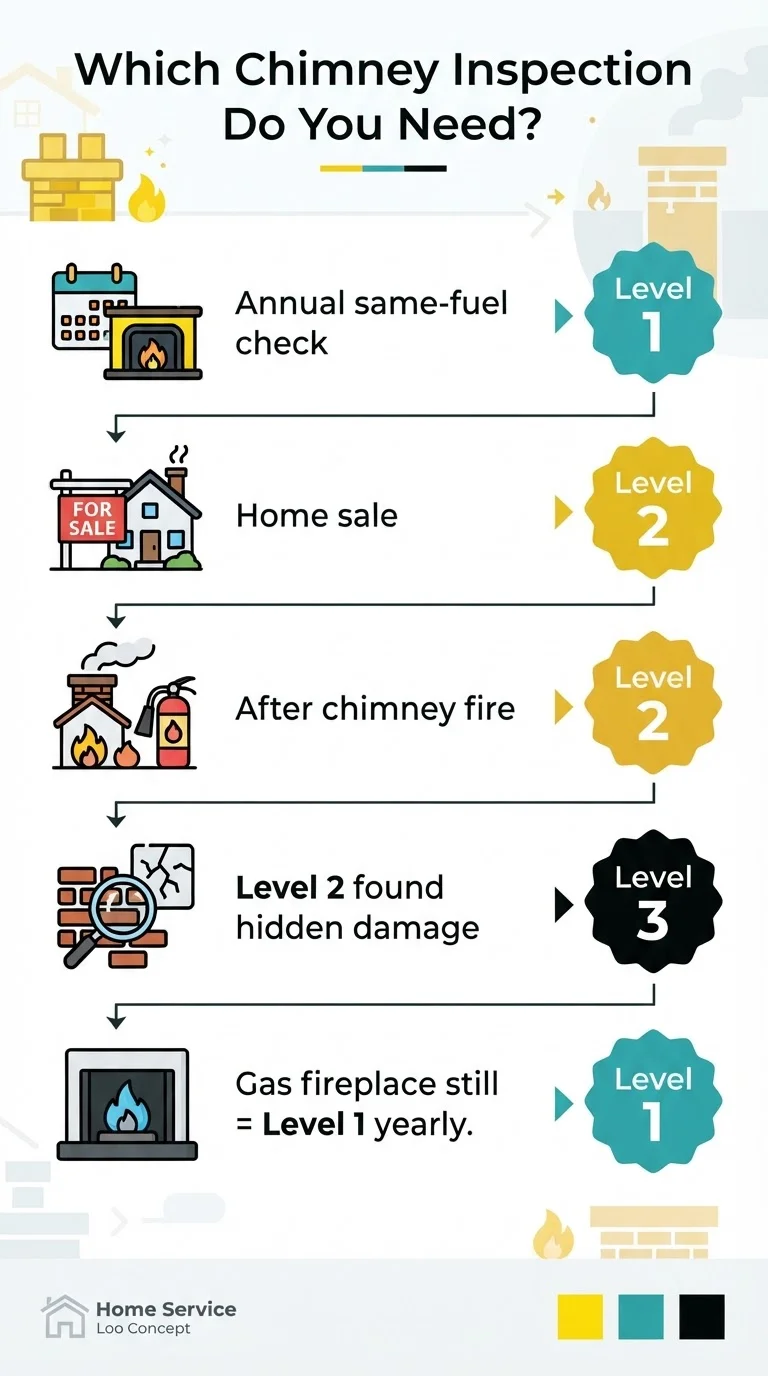
The pattern is worth internalizing. If anything about the system, the building or the ownership has changed, it is a Level 2. Otherwise it is a Level 1.
The Jersey Shore Problem Nobody Quotes For
Coastal chimneys fail differently than inland ones, and the difference costs money.
Salt air attacks the mortar joints and the metal components hardest. Chase covers, crowns and flashing corrode faster within a mile of the water. In our experience the flashing is what fails first on Monmouth County homes, well before the masonry does.
That matters for the inspection because flashing failure looks like a chimney leak. Water shows up on the ceiling near the chimney chase. The homeowner books a chimney inspection. The actual defect is roofing. A good inspector will say so.
If the report comes back pointing at flashing or roof plane, that is a different trade. The lifespans involved sit in our guide to roof material and lifespan. Storm-related damage falls under storm damage repair.
The second coastal issue is disuse. A large share of shore homes have fireplaces that get used a handful of times a year, or not at all. Owners skip the inspection on the grounds that they never light it.
That reasoning fails for two reasons. An unused flue still collects animal nests and debris. In many homes the same chimney vents the furnace or water heater. That runs all winter whether the fireplace does or not.
What a Level 1 Should Actually Include
A Level 1 that takes ten minutes and produces no paperwork is not a Level 1.
The inspector should check the readily accessible chimney exterior and interior. That includes the accessible parts of the appliance and the chimney connection. They are verifying three things. That the structure is sound, that it is free of deposits, and that clearances are correct.
You should receive a written report. It should say what was checked, what was found, and what if anything needs work. If the recommendation is a repair, the report should distinguish between safety-critical and cosmetic.
Homeowners call us most often after that report lands, asking whether the findings are real. The honest answer is that some are and some are upsells. A cracked crown and a missing cap are real. A recommendation to reline a sound flue deserves a second opinion, especially with no camera footage attached.
The Carbon Monoxide Case for Paying Attention
Fire is the risk people associate with chimneys. Carbon monoxide is the one that actually rises in winter.
More than half of consumer product carbon monoxide deaths occur in November through February. Heating systems are among the largest contributors. A flue that cannot draw properly sends combustion gases back into the house.
This is why the annual requirement for chimneys and vents is written around soundness, deposits and clearances rather than soot alone. A chimney can look clean and still be unsafe.
Blockage is the usual mechanism. Bird and squirrel nests, a fallen chunk of liner, or a collapsed clay tile will all restrict a flue. None of them are visible from the fireplace opening.
What Actually Drives the Price
Four things move a quote, and none of them are negotiable.
Chimney height and accessibility come first. A steep slate roof on a three-story house is a different job from a ranch with a short stack.
Flue count is second. A house with a fireplace flue and a separate furnace flue is two inspections in one visit, and it is priced that way.
Condition is third. A chimney that has not been swept in years may need cleaning before anyone can see the liner. That is a separate line item from the inspection itself.
Fuel type is fourth. Wood-burning systems accumulate creosote and take longer to assess than a direct-vent gas unit.
Ask which level you are being quoted for, and ask what happens to the price if the inspector escalates mid-visit. A reputable company will answer both without hesitating.
Booking It at the Right Time of Year
Sweeps are cheapest and most available in late summer and early fall. By late October the calendar is full, and by the first cold snap it is measured in weeks.
So treat this as a September item, not a November one. The same logic covers the rest of the heating system. We set that out in the heating maintenance schedule and the winter efficiency guide.
We do not sweep chimneys. What we handle is what the report flags around it. Flashing, trim and interior water damage all fall under general home repairs. If a report has left you unsure what is urgent, send it over.
FAQ
How much does a chimney inspection cost?
A Level 1 typically runs $100 to $950 and a Level 2 runs $200 to $1,000. The national average across all types is near $450. Level 3 work runs far higher, because it involves removing masonry.
How often should a chimney be inspected?
Once a year. NFPA 211 requires an annual inspection for soundness, freedom from deposits and correct clearances. That holds however rarely the fireplace is used.
Do I need a chimney inspection to sell my house in New Jersey?
A Level 2 inspection is called for at any transfer of ownership. Many buyers’ inspectors will also flag the chimney separately.
Does a gas fireplace need an inspection?
Yes. The annual requirement covers all chimneys, fireplaces and venting systems. A blocked gas flue is a carbon monoxide risk rather than a fire risk.
Is a chimney inspection the same as a chimney sweep?
No. An inspection assesses condition. A sweep removes deposits. They are often sold together, and the inspection is the part that produces the report.
Sources
Need a hand with your home?
If you have a plumbing question or need to schedule a service call, our team is ready to help. We serve West Long Branch and communities across Monmouth and Ocean Counties, NJ.